
- Workflow Coverage8.9
- Documented Automation Scope8.8
- Integration Coverage8.7
- Pricing Value8.5
- Documentation Completeness8.6
Review scope: Current official product, pricing, integration, and support documentation. Hands-on findings are only stated when explicitly tested.
| Vendor | Decision factor | Officially documented detail | Source | Checked | Fact ID |
|---|---|---|---|---|---|
| ToolJet | Integrations | Cloud — Team (Most Popular): $199 per builder/month (Saved 20%) — All Pro features, plus up to 100 end users, unlimited apps, 3,000 AI credits per builder, SSO integration, custom user groups, white labelling, custom domain, app themes, modules, audit logs, Git sync, priority support portal access. | Official pricing | 2026-08-31 | FACT-D7FEFD47121F |
| ToolJet | Add-ons and overages | Cloud — Enterprise: Starts at $3,000 per month — All Team features, plus unlimited end users (no per-user fees), custom AI credits, SCIM provisioning, custom AI model options, custom data retention policies, premium SLAs, dedicated support manager, optional dedicated expert/training, unlimited add-on AI credits, multi-environment (dev/staging/prod). | Official pricing | 2026-08-31 | FACT-52DC83E03C83 |
| ToolJet | Enterprise terms | Self-Hosted — Enterprise: Starts at $3,000 per month — All Team features, plus unlimited end users (no per-user fees), custom AI credits, SCIM provisioning, development lifecycle permissions, automated deployments, dynamic access rules, custom AI model options, multi-instance deployments, air-gapped deployment, custom data retention policies, premium SLAs, optional support manager/dedicated expert/custom training. | Official pricing | 2026-08-31 | FACT-3409469FB585 |
| ToolJet | Pricing | Cloud — Pro: $79 per builder/month — All Free features, plus up to 50 end users, up to 5 apps, 2,000 AI credits per builder, custom styling, version control, email support. | Official pricing | 2026-08-31 | FACT-1AF570DA03D2 |
| ToolJet | Add-ons and overages | Cloud — Free: $0 per builder/month — 2 builders, up to 50 end users, up to 2 apps, 100 AI credits, no add-on AI credits, predefined user roles, community support via Slack. | Official pricing | 2026-08-31 | FACT-4E4727B48823 |
Pricing and limits to verify before buying
When evaluating ToolJet for your organization, confirm the commercial terms and plan scope that affect builders, AI usage, app counts, and workspace-level sharing. Vendor pricing pages and negotiated contracts can change; verify current official terms before purchasing.
Evaluation and Plan Selection
ToolJet offers an evaluation path for prospective customers to exercise the platform. Use that path to validate AI-assisted app generation, integrations, and workspace sharing, but check the vendor's current signup and pricing pages for the exact evaluation terms and any feature restrictions.
Paid Plans and Usage Considerations
For a meaningful hands‑on evaluation of ToolJet's AI-assisted app generation flows, plan to use a paid tier that includes enough builder entitlements and AI-credit allowance to generate apps, test integrations, and share connections within a workspace. Confirm which features and resource allowances are included in each paid tier rather than assuming all capabilities are available on lower-cost plans.
Upgrade Triggers
You should consider upgrading or negotiating enterprise terms when sustained AI-credit consumption or growing numbers of builders, apps, or end users approach your plan's limits and begin to affect delivery or cost predictability. Higher-tier or enterprise agreements can broaden AI-credit pools, app/builder allowances, and enterprise entitlements (for example, SSO/SCIM and contract-level SLAs); verify the exact scope and entitlements with ToolJet.
Key Verification Points
Before committing, confirm the following with ToolJet's official pricing or contract terms:
- Builder counts and included AI-credit allowances for your expected evaluation and initial production use.
- End-user and app limits, and how those limits are calculated (per workspace, per builder, or per account).
- Availability and scope of enterprise features you need (SSO/SCIM, multi-environment support, audit logs, etc.).
- Whether add-on AI credits or other overage/credit purchase options exist and their retention or expiry terms.
- Any workspace- or organization-level sharing and configuration that requires a specific plan or contract.
Always verify current limits, entitlements, and any promotional offers on ToolJet's official pricing page or in a negotiated contract before finalizing a purchase.
Where This Tool Fits in Your Workflow
ToolJet is positioned as a low-code platform with AI-assisted app- and agent-building features intended for teams that need to accelerate internal app development, automate workflows, and manage embedded databases. The language below is neutral and focused on buyer fit rather than marketing claims.
Ideal Users and Use Cases
Target Users:
- AI managers and developers: ToolJet provides an AI App Builder and an Agent Builder intended to speed prototype-to-deployment cycles for AI-driven internal apps while still allowing code where needed.
- Engineering and IT leaders: The vendor documents a large set of pre-built data-source integrations and a range of governance and security controls, which are relevant when integrating apps into existing IT estates.
- Product managers: Visual workflow automation and built-in database features are positioned to help product teams iterate on internal tools and operational workflows.
Common Use Cases:
- Internal tools and business applications: ToolJet is often used to build operational apps—dashboards, support tools, and simple CRUD interfaces—that integrate with internal data sources.
- AI chatbots and back-office automation: The platform's AI and agent capabilities are documented for use in automating routine tasks and augmenting internal workflows.
Adoption Considerations
Adoption burden profile:
- Initial setup: Small teams and pilot projects can start with ToolJet's self-service offering to validate integrations, builders, and AI-assisted app generation without engaging enterprise procurement. For a hands-on evaluation, you will need enough builders and AI credits to exercise the app-generation and integration flows.
- Scaling needs: Sustained growth in the number of builders, apps, or recurring AI-credit consumption is the primary trigger to consider higher-tier or negotiated plans. Upgrading can also introduce additional entitlements (for example, SSO/SCIM, workspace-level sharing, or expanded audit/log retention) that affect governance and operations.
Enterprise readiness:
- ToolJet's enterprise-level options are documented to include a broader set of entitlements (custom AI-credit arrangements, SCIM/SSO provisioning, premium SLAs, and other governance features). Because enterprise terms can be negotiated, confirm the exact scope of entitlements and contractual SLAs with the vendor or your sales contact before relying on them for production deployments.
Decision Triggers
When to consider ToolJet:
- For evaluation: Plan to use a paid evaluation path that provides sufficient builders and AI credits to generate apps, test integrations, and share connections within a workspace; this gives a realistic sense of operational behavior.
- For production use: If you expect sustained growth in apps or builder usage, or if you require contract-level SLAs, enterprise provisioning (SCIM/SSO), or higher AI-credit pools, plan to move to the Team/Enterprise offerings or negotiate equivalent entitlements.
Verification actions:
- Before purchase, verify current builder counts, included AI-credit allotments, end-user and app limits, SSO/SCIM availability, multi-environment support, and any other enterprise entitlements on ToolJet's official pricing and sales documentation or by contacting the vendor. This ensures alignment between your operational requirements and the plan or contract you select.
Will It Connect to the Tools You Already Use?
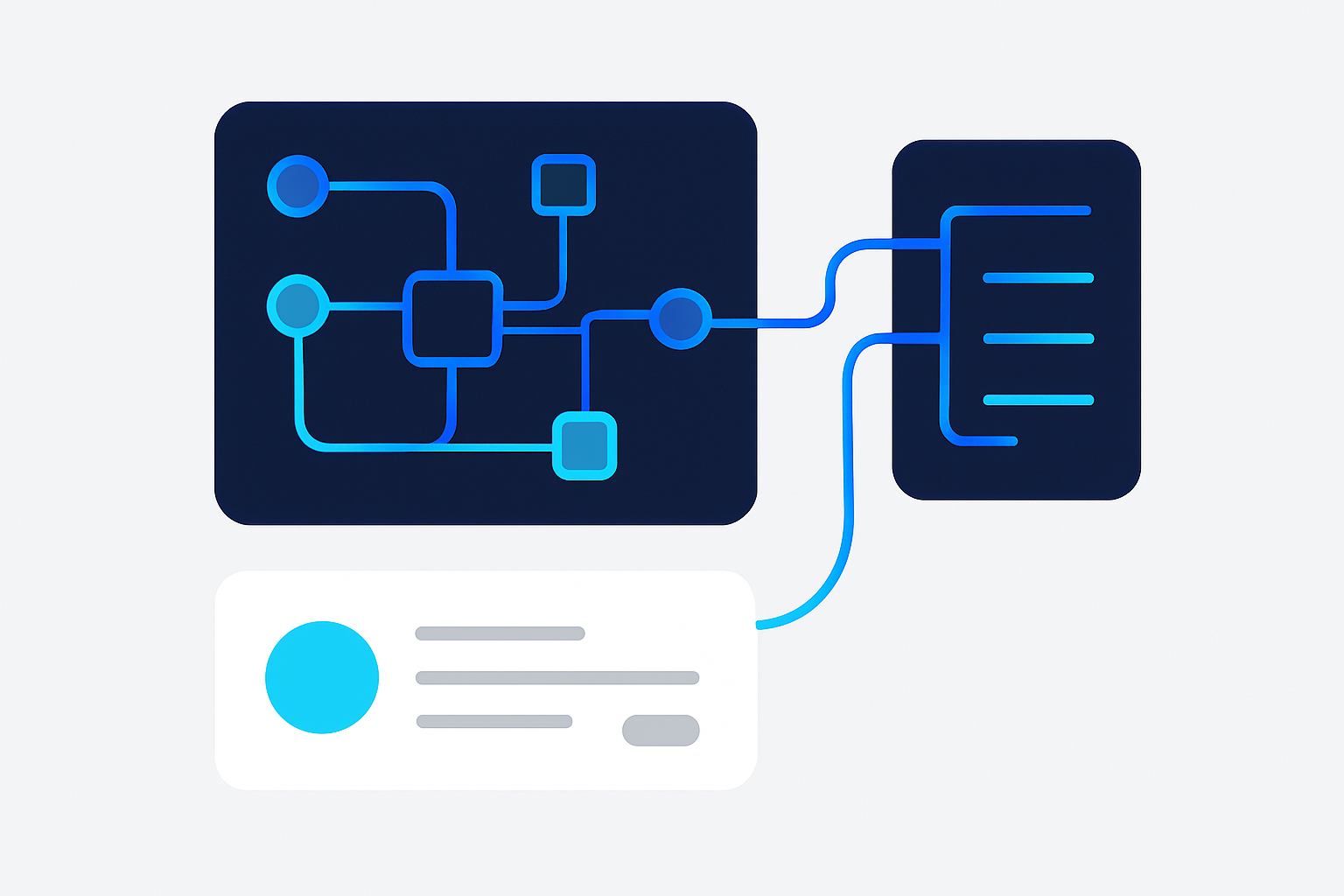
ToolJet exposes a network of pre-built integrations and extension points intended to connect applications on the platform with external systems. That surface covers common categories — APIs, SQL and NoSQL databases, cloud storage, AI/LLM services, and popular SaaS tools — and is designed to reduce the amount of bespoke integration work required when building internal apps.
Integration Network Profile
Rather than relying exclusively on custom engineering, ToolJet provides a catalog of pre-built connectors for a broad range of data sources and services. For scenarios not covered by those connectors, the platform supports private or custom connectors (a developer-facing extension path) so organizations can integrate proprietary systems or niche applications. For hybrid deployments, ToolJet’s connector and deployment options are intended to support both cloud and self-hosted architectures, but hybrid use will typically require attention to networking, security, and deployment configuration.
If your stack includes specialized systems, plan to validate the available connectors and the technical requirements for any custom connector work (API surface, authentication, rate limits, and security posture).
Interface Profile
ToolJet’s data-source workflow is surfaced in the app builder UI: users can add and configure data sources from the platform interface, selecting from categories such as databases, REST APIs, and plugins. The UI exposes connection fields, authentication options, and basic configuration, and it lets a connected source be reused across applications in the same workspace. The platform also supports using multiple connections for the same logical data source within queries, which can help with environment separation or failover testing.
Teams evaluating ToolJet should test the connection flows that matter to them (including auth methods, schema discovery, and query performance) to ensure the interface and UX meet their operational needs.
Buyer Implications
For buyers with an existing toolset, ToolJet’s connector catalog and the ability to create custom connectors make it possible to incorporate many current systems into new internal apps rather than rebuilding integrations from scratch. That said, confirm the current list of supported integrations and any connector limitations against ToolJet’s official documentation or by contacting the vendor. If you depend on uncommon or highly regulated systems, expect additional development, network configuration, and security review when implementing custom connectors.
Overall, ToolJet’s integration approach emphasizes flexibility and extensibility; verify the specific connectors and deployment requirements for your environment before committing to a rollout.
Baseline alternatives to compare
When evaluating ToolJet for your organization, compare it against two realistic baselines: in-house custom development and other managed low-code platforms. Each baseline emphasizes different trade-offs among control, speed to delivery, and long-term maintenance; the table below summarizes which buyers they suit and when switching to ToolJet may be appropriate.
| Alternative | Best when | Trade-off | Switch when |
|---|---|---|---|
| In-house custom development | You require maximum control over architecture, bespoke performance tuning, and a custom technology stack without vendor dependencies. | Longer delivery time and higher engineering and maintenance costs compared with an all-in-one low-code platform. | When time-to-market and maintenance burden become significant, switch to ToolJet to accelerate delivery and reduce ongoing engineering overhead. |
| Other managed low-code platforms | You prefer vendor-managed hosting and a familiar set of integrations with predictable operational responsibilities. | May offer less flexible AI-assisted generation or different pricing/limit tradeoffs compared with ToolJet's builder-and-AI-credit model. | Switch to ToolJet if you need stronger AI-assisted app generation, an integrated DB and agent builder, or the option to self-host/air-gap under negotiated enterprise terms. |
When not to choose this tool
Do not choose ToolJet if your immediate requirements depend on plan-level entitlements that ToolJet documents as available only under Enterprise or self‑hosted Enterprise agreements and you are not prepared to pursue Enterprise terms.
-
Require BYOK or an on‑prem AI gateway without an Enterprise contract
ToolJet’s documentation indicates bring‑your‑own‑LLM (BYOK) key support and on‑prem AI gateway capabilities are scoped to Enterprise/self‑hosted Enterprise entitlements. If those capabilities are non‑negotiable for your deployment and you do not intend to negotiate Enterprise terms, evaluate vendors that include BYOK/on‑prem AI gateway support in their publicly available plans or be prepared to request Enterprise terms from ToolJet. -
Need contract-level SLAs or a dedicated support manager without entering Enterprise terms
Contractual SLAs and dedicated support management are described as Enterprise‑level entitlements in ToolJet’s documentation. If you require contract-level SLAs or a named support manager but do not intend to pursue Enterprise contracting, consider vendors whose public plans include the support level you need, or verify current Enterprise support options and entitlements via ToolJet’s official pricing or sales pages before proceeding.
These points reflect how ToolJet structures certain enterprise features. Confirm current entitlements and the process for obtaining Enterprise terms on ToolJet’s official pricing or sales pages before making a procurement decision.
ToolJet stands out as a versatile AI-native low-code platform, ideal for teams aiming to quickly develop internal applications and automate workflows with minimal coding effort. Its ability to integrate with over 80 data sources and provide enterprise-grade security makes it a strong contender for organizations seeking to streamline operations and enhance productivity. However, it's crucial to align ToolJet's capabilities with your specific needs and verify current pricing and plan details on the official vendor site. If your team is ready to explore an efficient path to building full-stack apps and AI agents, ToolJet offers a compelling opportunity. For the latest terms and conditions, refer to the official ToolJet website.